 EN
EN

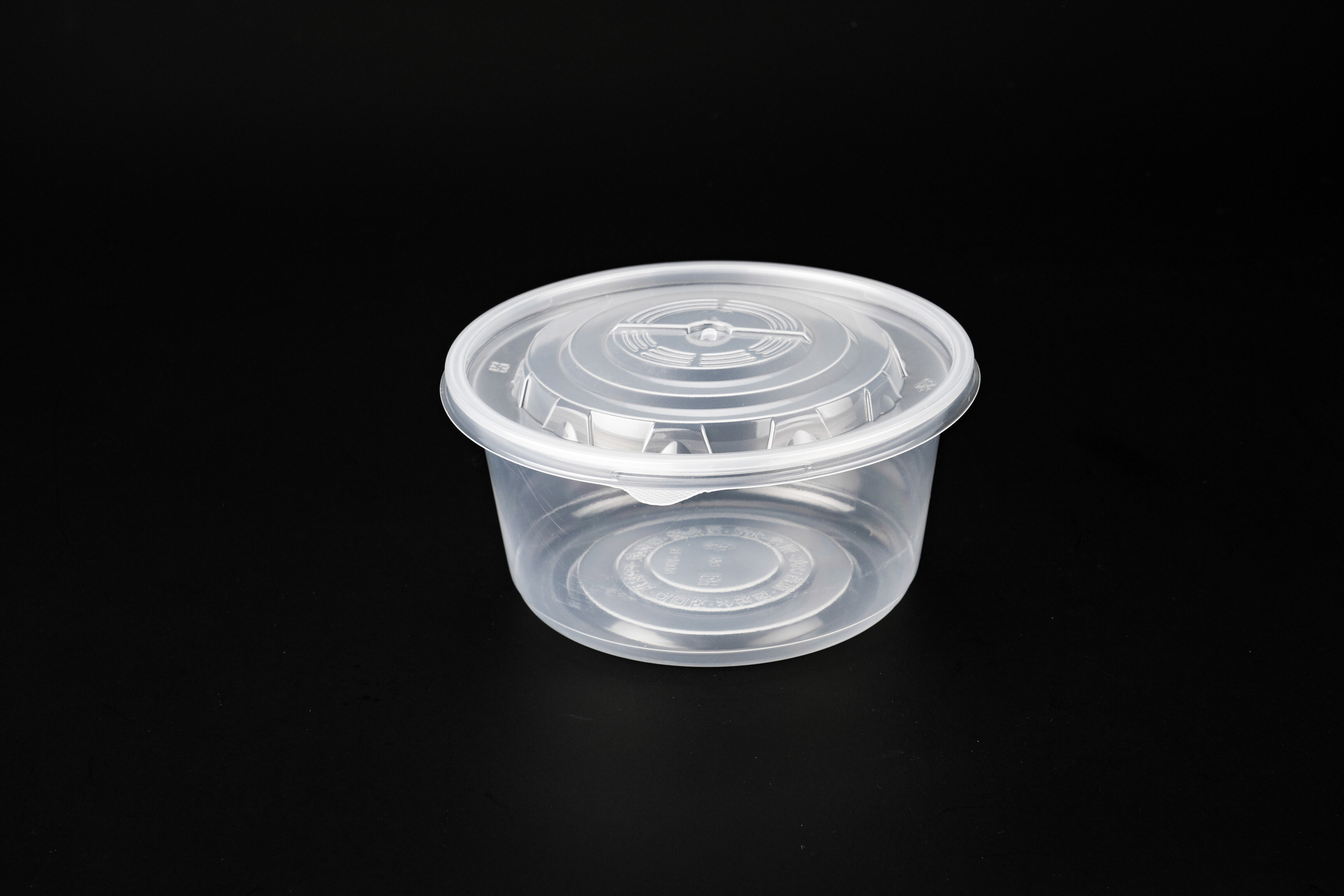
Maintaining the crispness of fresh salads in food service and retail environments depends heavily on choosing the right lid design for your packaging. When using PET clear salad containers, the lid configuration directly influences moisture control, ventilation, and structural integrity—all critical factors that determine whether your greens stay crisp or turn soggy within hours. This comprehensive guide explores the engineering principles behind effective lid designs and explains how specific features contribute to extended freshness in PET clear salad containers used across restaurants, catering services, meal prep businesses, and grocery retailers.
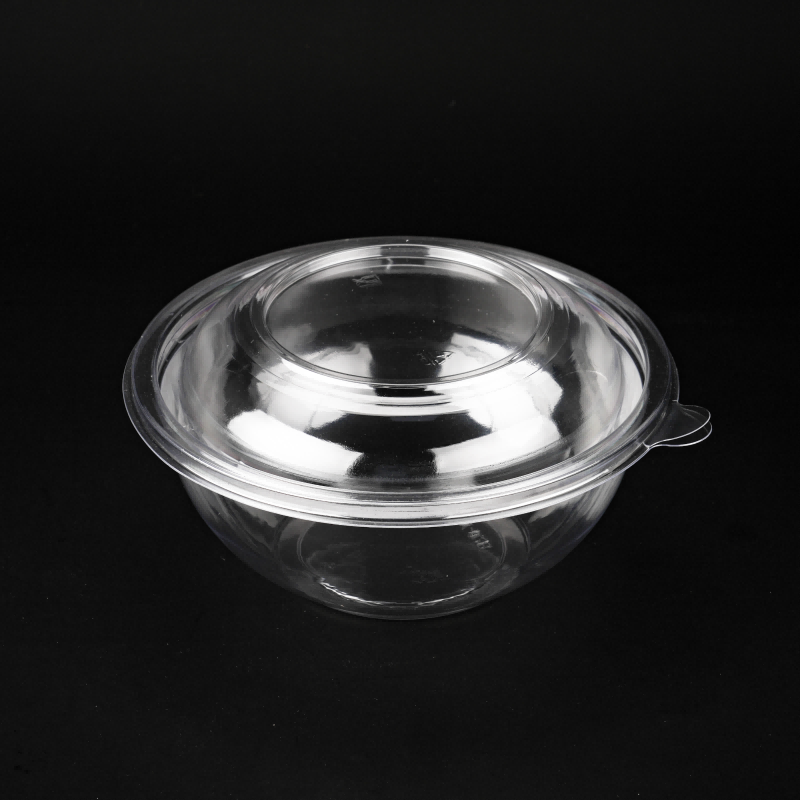
The relationship between lid design and salad crispness is rooted in controlling the internal microclimate within sealed containers. PET clear salad containers offer excellent visibility and structural strength, but without proper lid engineering, condensation accumulates on interior surfaces, drips onto delicate greens, and accelerates wilting. Professional food packagers understand that the best lid designs incorporate specific geometric features, material properties, and sealing mechanisms that balance moisture retention with controlled air exchange, thereby preserving texture and extending shelf life substantially compared to basic flat lid configurations.
Fundamental Lid Design Principles for Moisture Management
Understanding Condensation Formation in Sealed Containers
When fresh produce is placed inside PET clear salad containers and sealed, respiration continues, releasing moisture vapor into the enclosed space. As this warm, humid air contacts the cooler lid surface—especially in refrigerated environments—water droplets form through condensation. These droplets eventually grow large enough to fall back onto the salad components, creating wet spots that break down cell walls in leafy greens and cause rapid deterioration. Effective lid designs address this challenge by managing the temperature differential and providing pathways for condensation to move away from food contact areas.
The geometry of the lid interior surface plays a crucial role in directing condensation behavior. Flat lid designs allow water droplets to accumulate randomly and drip directly onto food below. In contrast, engineered lid architectures incorporate subtle slopes, ridges, or textured patterns that guide condensation toward peripheral collection zones. This directional moisture management prevents water from falling onto the salad center where delicate greens are most concentrated. Premium PET clear salad containers feature lid designs with these integrated moisture-routing features that actively protect contents from condensation damage.
Material Thickness and Thermal Performance
The wall thickness of PET material used in lid construction significantly affects thermal conductivity and condensation rates. Thicker PET sections provide better insulation, reducing the temperature gradient between the container interior and external refrigeration environment. This thermal buffering minimizes the rate at which warm moisture-laden air cools when contacting the lid surface, thereby reducing condensation formation. However, excessive thickness adds material cost and weight, so optimal lid designs balance thermal performance with economic and practical considerations.
Material density and crystallinity also influence moisture barrier properties. High-clarity PET formulations used in clear salad containers typically exhibit excellent moisture vapor transmission resistance, which prevents external humidity from entering the container while retaining internal moisture at controlled levels. Lid designs that incorporate consistent wall thickness across the entire surface ensure uniform barrier performance, preventing weak spots where moisture exchange rates might differ. This uniformity is particularly important for PET clear salad containers used in varying storage conditions, from refrigerated display cases to ambient temperature delivery scenarios.
Ventilation Features and Controlled Air Exchange
Strategic Vent Hole Placement and Sizing
Contrary to intuition, completely sealed PET clear salad containers can accelerate spoilage by trapping excessive moisture and limiting oxygen availability for continued respiration. Properly designed lids incorporate controlled ventilation features—typically small apertures or microporous zones—that allow limited gas exchange while maintaining food safety barriers against contaminants. The size, number, and positioning of these vent holes determine the rate of moisture and gas exchange, which must be carefully calibrated to the specific produce types being stored.
For crisp salad applications, vent holes are typically positioned in the lid periphery rather than directly above the food mass. This placement allows water vapor to escape while minimizing the entry of external contaminants. The diameter of individual vent holes generally ranges from 0.5 to 2 millimeters—small enough to prevent insect intrusion and large particulate contamination, yet sufficient to enable controlled moisture release. Advanced lid designs for PET clear salad containers may feature arrays of precisely engineered perforations that collectively provide optimal ventilation without compromising structural integrity or creating excessive moisture loss that would dehydrate salad components.
Breathable Membrane Integration
Some premium lid designs incorporate breathable membrane patches that provide more sophisticated gas exchange control than simple vent holes. These membranes typically consist of microporous films that allow water vapor and respiratory gases to pass through while blocking liquid water and microbial contaminants. This selective permeability maintains optimal internal humidity levels—high enough to prevent dehydration but low enough to avoid condensation accumulation. The integration of breathable membranes into PET clear salad containers represents an advanced approach particularly valuable for extended shelf-life applications in retail environments.
The effectiveness of membrane-based ventilation depends on proper sizing and placement within the lid structure. Membranes typically occupy 2-5% of the total lid surface area, providing sufficient exchange capacity without compromising the primary barrier function. Positioning these features in dome peaks or peripheral zones maximizes their efficiency by placing them where vapor concentration is highest. For food service operations prioritizing maximum freshness duration in PET clear salad containers, lid designs with integrated breathable membranes deliver measurably superior crispness retention compared to conventional sealed or simple-vent alternatives.
Structural Geometry and Interior Architecture
Dome Height and Volume Optimization
The vertical clearance provided by lid dome height significantly influences how PET clear salad containers maintain product quality. Higher dome profiles create greater headspace volume, which reduces the relative humidity percentage when the same amount of moisture is released from salad components. This larger air volume acts as a buffer, allowing more water vapor to be absorbed before reaching saturation point and condensing. Additionally, increased headspace prevents direct physical contact between the lid interior surface and delicate salad toppings, which can cause bruising and compression damage that accelerates spoilage.
However, excessive dome height presents practical challenges including increased storage volume requirements, higher material costs, and reduced stacking stability. Optimal lid designs for PET clear salad containers typically feature dome heights ranging from 15 to 35 millimeters above the container rim, depending on the intended salad volume and component height. This range provides adequate headspace for most fresh salad configurations while maintaining reasonable packaging efficiency. The dome profile itself—whether hemispherical, elliptical, or faceted—also affects internal air circulation patterns and condensation behavior, with gradually sloped profiles generally providing better moisture management than abrupt angular transitions.
Interior Ribbing and Texture Patterns
The interior surface architecture of lids used with PET clear salad containers can incorporate deliberate texture patterns that enhance moisture management performance. Radial ribs extending from the dome center to the periphery create channels that guide condensation outward, away from the food mass below. These ribs function as both structural reinforcements and moisture highways, increasing the effective surface area for condensation formation while directing water flow toward collection zones near the container walls where it causes minimal product contact.
Micro-texturing applied to interior lid surfaces can reduce the size of condensation droplets that form, creating a fine mist effect rather than large droplets. Smaller droplets have greater surface adhesion and are less likely to fall onto salad contents, instead remaining suspended on the textured surface until gradually absorbed or evaporated. This approach proves particularly effective in PET clear salad containers stored in temperature-stable refrigerated environments where dramatic temperature fluctuations are minimal. The combination of macro-scale geometric features like ribs with micro-scale surface texturing provides multi-level moisture control that significantly outperforms smooth, featureless lid interiors in preserving salad crispness.
Sealing Mechanisms and Closure Integrity
Rim Interface Design and Compression Sealing
The quality of the seal formed between the lid and container rim directly affects moisture retention and contamination prevention in PET clear salad containers. Effective lid designs feature rim geometries that create consistent compression across the entire perimeter when closed. This typically involves slightly oversized lid diameters that compress upon closure, creating interference fit seals that prevent both moisture loss and external contaminant entry. The rim profile may incorporate stepped or beveled edges that provide tactile and audible feedback when proper sealing is achieved, helping food service staff confirm secure closure.
The flexibility characteristics of PET material allow for elastic deformation during lid closure, which enables effective sealing without requiring separate gasket materials. However, the rim wall thickness must be engineered carefully—too thin and the material tears during repeated opening; too thick and insufficient compression occurs to form an adequate seal. Premium PET clear salad containers feature rim designs optimized through finite element analysis to balance sealing force requirements with material economy and user convenience. This engineering attention to sealing interface design measurably reduces moisture migration and extends the duration that salads maintain optimal crispness.
Tamper-Evident and Locking Features
For retail and delivery applications, lid designs incorporating tamper-evident features provide consumer confidence while also contributing to seal integrity. These features typically consist of frangible tabs or bands that must be broken to access contents, providing visible evidence of prior opening. The structural elements that enable tamper-evidence often simultaneously enhance sealing performance by creating multiple contact points around the rim perimeter. When properly implemented in PET clear salad containers, these features do not compromise ease of opening for legitimate users while significantly improving moisture barrier performance during the critical initial storage period.
Positive locking mechanisms represent an advanced sealing approach where lid and container rim geometries incorporate complementary features that snap together with mechanical interference. These designs provide superior seal consistency compared to simple press-fit closures, maintaining seal integrity even when containers are subjected to handling vibration or minor impacts during transportation. For food service operations using PET clear salad containers in delivery or catering contexts, locking lid designs substantially reduce the risk of premature opening and consequent moisture loss that would compromise salad quality upon customer receipt.
Application-Specific Design Considerations
Short-Term Versus Extended Storage Requirements
The optimal lid design for PET clear salad containers varies depending on intended storage duration and handling conditions. For immediate consumption applications such as quick-service restaurant dine-in orders, simpler lid designs with basic sealing and minimal ventilation may prove adequate since the salad will be consumed within 30-60 minutes of packaging. These applications prioritize ease of opening and visual appeal over extended freshness maintenance. The lid design focuses primarily on preventing spillage during short-distance transport from preparation area to customer table.
In contrast, meal prep services and grocery retail applications require PET clear salad containers with lid designs optimized for multi-day freshness preservation. These scenarios demand sophisticated moisture management features including controlled ventilation, condensation routing architecture, and robust sealing mechanisms. The lid design must maintain salad crispness for 3-7 days under refrigerated storage while accommodating temperature fluctuations during distribution and retail display. This requirement necessitates more complex interior geometries, potentially including breathable membrane integration and advanced rim sealing systems that justify higher unit costs through substantially extended shelf life and reduced product waste.
Component Separation and Multi-Compartment Integration
Many salad applications benefit from keeping wet ingredients like dressings, proteins, or tomatoes separated from delicate greens until consumption. Lid designs for PET clear salad containers can incorporate hanging compartments, insert cavities, or attached condiment cups that maintain ingredient separation while sharing the same primary closure. These integrated designs must account for the additional weight and moisture generation from separated components, often requiring reinforced dome structures and enhanced sealing around compartment interfaces.
The hanging compartment approach, where a small cup is suspended from the lid interior, proves particularly effective for dressing storage in PET clear salad containers. This configuration keeps liquid dressing completely isolated until the consumer removes the compartment and applies it to the greens. The lid design must provide secure attachment points that prevent compartment detachment during handling while maintaining the primary moisture management functions for the main salad volume below. Advanced designs incorporate pour spouts or tear-away seals on hanging compartments that facilitate controlled dressing application, enhancing user experience while preserving the core freshness-preservation functions of the lid architecture.
FAQ
How do vented lids compare to sealed lids for maintaining salad freshness in PET containers?
Vented lid designs generally outperform completely sealed lids for salad freshness in PET clear salad containers by allowing controlled moisture and gas exchange. Sealed lids trap excessive humidity that condenses and drips onto greens, accelerating wilting. Properly designed ventilation features release excess moisture vapor while maintaining sufficient internal humidity to prevent dehydration, typically extending crisp texture by 24-48 hours compared to sealed alternatives. The optimal approach uses small, strategically positioned vents rather than large openings that would cause rapid moisture loss.
What dome height provides the best balance between freshness and packaging efficiency?
For most salad applications in PET clear salad containers, dome heights between 20-30 millimeters above the rim provide optimal balance. This range creates sufficient headspace to reduce relative humidity and prevent lid contact with salad toppings while maintaining reasonable stacking efficiency for storage and transport. Lower profiles sacrifice freshness performance, while heights exceeding 35 millimeters increase material costs and reduce packaging density without proportional freshness benefits. Specific optimal height depends on typical salad volume and component height within your operation.
Can lid design differences actually extend salad shelf life by multiple days?
Yes, properly engineered lid designs can extend salad crispness duration by 2-4 days compared to basic flat lid configurations when used with PET clear salad containers under refrigerated storage. Lids incorporating condensation management features, controlled ventilation, and optimized sealing mechanisms maintain internal conditions that slow cellular breakdown in leafy greens. Testing shows that advanced lid architectures with interior ribbing and breathable membranes preserve acceptable texture quality for 5-7 days, compared to 2-3 days typical with simple press-fit flat lids, representing substantial reduction in food waste and expanded distribution possibilities.
Are there lid design features specifically beneficial for delivery and transport applications?
For delivery applications using PET clear salad containers, prioritize lid designs with positive locking mechanisms, reinforced dome structures, and peripheral sealing rather than center-seal configurations. Locking features prevent accidental opening during transport vibration, while reinforced domes resist compression if containers are stacked. Seals positioned around the entire rim perimeter rather than localized seal points maintain closure integrity despite handling stresses. Additionally, integrated carrying features or stacking lugs molded into the lid design improve handling stability during delivery, reducing the risk of spillage or premature opening that would compromise salad quality before customer receipt.
Table of Contents
- Fundamental Lid Design Principles for Moisture Management
- Ventilation Features and Controlled Air Exchange
- Structural Geometry and Interior Architecture
- Sealing Mechanisms and Closure Integrity
- Application-Specific Design Considerations
-
FAQ
- How do vented lids compare to sealed lids for maintaining salad freshness in PET containers?
- What dome height provides the best balance between freshness and packaging efficiency?
- Can lid design differences actually extend salad shelf life by multiple days?
- Are there lid design features specifically beneficial for delivery and transport applications?