 EN
EN

When businesses invest in branded drinkware, understanding what custom printing options are available for plastic cups with lids becomes a critical decision point. Whether you operate a café, manage corporate events, run a catering service, or supply hospitality venues, the ability to print your brand identity directly onto disposable drinkware transforms a functional item into a powerful marketing touchpoint. The range of customization methods available today is broader than many buyers realize, and choosing the right approach depends on your volume, budget, artwork complexity, and end-use environment.
The market for custom-printed plastic cups with lids has matured significantly, with printing technologies now capable of delivering sharp full-color graphics, durable finishes, and consistent results across large production runs. From screen printing to digital decoration, each method carries distinct advantages in terms of color fidelity, minimum order quantities, and surface compatibility. This article breaks down the primary printing options available, explains how each works in practice, and helps you identify which approach best fits your specific application and business goals.
Core Printing Methods for Plastic Cups with Lids
Screen Printing
Screen printing remains one of the most widely used decoration methods for plastic cups with lids, particularly for high-volume orders where cost efficiency matters. The process involves pushing ink through a mesh screen onto the cup surface, with each color requiring a separate screen. This makes it highly economical at scale but less practical for designs with many gradient tones or photographic detail.
For plastic cups with lids used in quick-service restaurants, stadiums, or large-scale events, screen printing delivers bold, consistent results that hold up well under typical handling conditions. The ink bonds effectively with common plastic substrates including polypropylene and PET, and the finished print resists smearing during normal use. Most suppliers offer screen printing in one to six spot colors, which suits logos, wordmarks, and simple graphic elements very well.
One practical consideration is that screen printing requires setup costs per color, meaning the per-unit price drops substantially as order quantities increase. Businesses ordering thousands of plastic cups with lids regularly will find screen printing delivers the best cost-per-unit ratio among all available methods.
Digital Printing
Digital printing has become increasingly viable for plastic cups with lids, especially for shorter runs or designs that require photographic quality and full-color gradients. Unlike screen printing, digital methods apply ink directly from a digital file without the need for physical screens or plates, which eliminates setup costs and allows for rapid turnaround.
This method is particularly valuable when a business needs multiple design variations within the same order, such as different flavors, seasonal promotions, or regional branding. Digital printing on plastic cups with lids supports CMYK and extended color gamuts, making it suitable for complex artwork, product photography, and detailed illustrations that would be impractical with screen printing.
The trade-off is that digital printing typically carries a higher per-unit cost at large volumes compared to screen printing. However, for specialty runs, limited editions, or test batches, it offers flexibility that no other method can match. Advances in UV-curable digital inks have also improved durability on plastic surfaces, addressing earlier concerns about scratch resistance and color longevity.
Labeling and Sleeve Options for Plastic Cups with Lids
Shrink Sleeve Labels
Shrink sleeve labeling is a decoration approach that wraps a pre-printed plastic film around the cup body, which then conforms tightly to the cup's shape when heat is applied. This method allows for 360-degree coverage, meaning the entire outer surface of plastic cups with lids can carry printed content, including branding, nutritional information, promotional messaging, and decorative graphics.
The visual impact of shrink sleeves is notably high. Because the label material itself can be printed with vibrant colors and metallic effects before application, the finished product often looks more premium than direct-print alternatives. This makes shrink sleeves a popular choice for retail-ready beverages, specialty drinks, and branded merchandise where shelf appeal matters.
From a practical standpoint, shrink sleeves also allow businesses to use standard unprinted plastic cups with lids and apply custom sleeves as needed, which can simplify inventory management. Different sleeve designs can be applied to the same cup format, giving operators flexibility to run multiple SKUs without maintaining separate printed cup inventories.
Pressure-Sensitive Labels
Pressure-sensitive labels, commonly known as peel-and-stick labels, offer a straightforward and cost-effective way to add custom branding to plastic cups with lids. These labels are printed separately and applied to the cup surface either manually or through automated labeling equipment. They are available in a wide range of materials including paper, polypropylene film, and polyester, each offering different levels of moisture resistance and durability.
For businesses that need to customize plastic cups with lids quickly or in smaller quantities, pressure-sensitive labels provide an accessible entry point. They require no minimum order commitment on the cup side, since the customization happens at the label level. This is particularly useful for startups, pop-up operations, or seasonal businesses that cannot justify large custom print runs.
The limitation of pressure-sensitive labels is that they may not adhere as seamlessly as direct printing or shrink sleeves, and the label edges can be visible on the cup surface. For premium applications, this may not meet the desired aesthetic standard, but for functional branding in food service or event contexts, they remain a practical and widely used solution.
Lid Printing and Decoration Considerations
Printing Directly on Lids
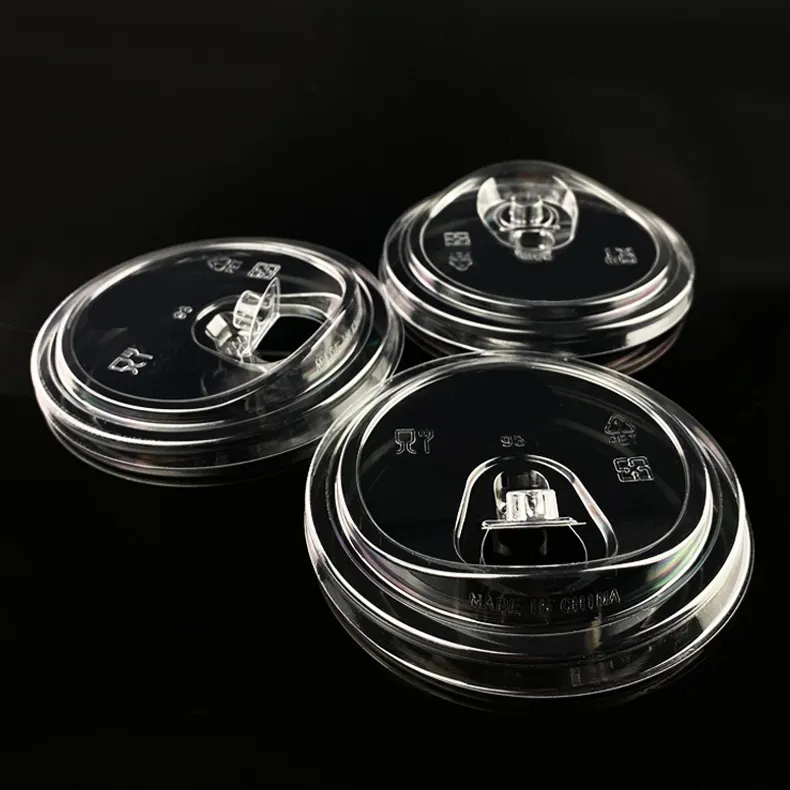
Lids present a distinct surface challenge compared to cup bodies. Most lids for plastic cups with lids are made from polystyrene, polypropylene, or PET, and their curved or domed geometry limits the area available for flat printing. Despite this, direct printing on lids is achievable through pad printing and certain digital methods that can accommodate non-flat surfaces.
Pad printing uses a silicone pad to transfer ink from an etched plate onto the lid surface, conforming to curves and contours that would defeat flat printing methods. It is well-suited for small logos, text, or simple graphics on the flat rim or top surface of lids. For plastic cups with lids used in branded coffee programs or premium beverage services, a printed lid adds a finishing detail that reinforces brand consistency.
The print area on most lids is inherently limited, so lid printing works best for compact brand marks, short text, or simple icons rather than complex artwork. Businesses should work with their supplier to confirm the printable zone dimensions before finalizing lid artwork.
Colored and Tinted Lids as a Branding Tool
Beyond direct printing, one of the most effective and underutilized customization options for plastic cups with lids is the use of colored or tinted lids. Rather than relying solely on printed graphics, specifying a lid in a brand-specific color creates immediate visual recognition without the cost of a print process. Many manufacturers offer lids in a range of standard colors and can produce custom colors for sufficient order volumes.
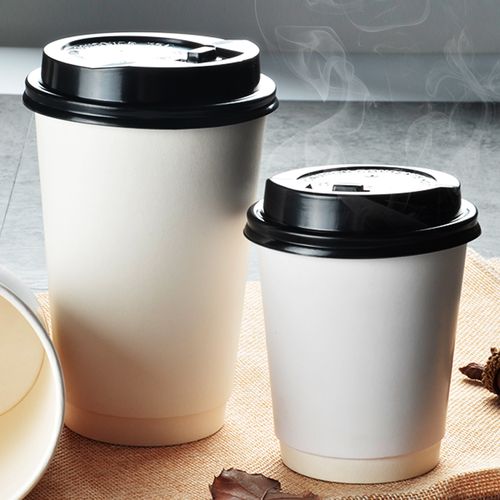
This approach is particularly effective in environments where the cup and lid are seen together as a unit, such as takeaway counters, delivery packaging, or retail displays. A distinctive lid color can become as recognizable as a logo for repeat customers, reinforcing brand identity through consistent visual cues rather than printed text alone.
Combining a colored lid with a screen-printed or digitally printed cup body gives businesses a layered branding strategy that maximizes the visual impact of plastic cups with lids without requiring complex or expensive decoration on every surface.
Artwork and Design Requirements for Custom Printed Plastic Cups with Lids
File Formats and Color Specifications
Regardless of which printing method is selected, the quality of the final output on plastic cups with lids depends heavily on the quality of the supplied artwork. Most professional print suppliers require vector files in formats such as AI, EPS, or PDF for screen printing, as these formats scale without loss of resolution. For digital printing, high-resolution raster files at 300 DPI or above are typically acceptable.
Color specification is equally important. Screen printing uses Pantone Matching System colors to ensure consistency across production runs, while digital printing works in CMYK. If your brand uses specific Pantone colors, confirm with your supplier whether those colors can be matched accurately in the chosen printing method, as some hues are difficult to reproduce in CMYK without visible deviation.
Providing print-ready artwork that meets the supplier's technical specifications reduces the risk of delays, unexpected costs, and color discrepancies in the finished plastic cups with lids. Many suppliers offer dieline templates that show the exact printable area and bleed zones for their specific cup formats, and using these templates from the start of the design process saves significant time.
Minimum Order Quantities and Lead Times
Custom printing on plastic cups with lids typically involves minimum order quantities that vary by method and supplier. Screen printing generally requires higher minimums due to setup costs, often starting at several thousand units per design. Digital printing and label-based methods tend to have lower minimums, making them accessible for smaller businesses or test runs.
Lead times for custom-printed plastic cups with lids range from a few days for digital label printing to several weeks for full custom screen-printed production runs, particularly when new screens or tooling are required. Planning ahead is essential, especially for seasonal campaigns, product launches, or events with fixed dates.
Businesses that order plastic cups with lids regularly should consider establishing a standing order arrangement with their supplier, which can reduce lead times and lock in pricing. Some suppliers also offer warehousing services, holding printed inventory and fulfilling orders in smaller batches as needed, which balances the cost efficiency of large print runs with the flexibility of smaller deliveries.
Choosing the Right Printing Option for Your Application
Matching Print Method to Use Case
The right printing method for plastic cups with lids depends on a combination of factors including order volume, design complexity, budget, and the environment in which the cups will be used. High-volume food service operations with simple, consistent branding will typically find screen printing the most cost-effective choice. Businesses with complex artwork, multiple design variants, or lower volumes will benefit more from digital printing or label-based approaches.
For retail or premium beverage applications where visual impact is paramount, shrink sleeves offer the most comprehensive coverage and the highest perceived quality. For event-based or promotional use where speed and flexibility matter more than premium finish, pressure-sensitive labels or digital printing provide the fastest path from concept to finished product.
It is also worth considering the end-use environment. Plastic cups with lids used in cold beverage service will experience condensation on the outer surface, which can affect label adhesion and ink durability. Confirming that the chosen printing method and materials are rated for cold or wet conditions is an important step before committing to a large order.
Working with Suppliers to Optimize Results
Achieving the best results with custom-printed plastic cups with lids requires close collaboration with your supplier from the earliest stage of the project. Sharing your intended use case, volume projections, artwork files, and timeline upfront allows the supplier to recommend the most suitable printing method and flag any technical constraints before production begins.
Requesting physical samples or press proofs before approving a full production run is standard practice and strongly advisable. Colors can appear differently on plastic surfaces than on screen or paper, and a physical proof confirms that the finished plastic cups with lids will meet your expectations before you commit to the full order quantity.
Suppliers with experience in food service and beverage packaging will also be able to advise on compliance considerations, such as ensuring that inks used on plastic cups with lids are food-safe and meet relevant regulatory standards for direct or indirect food contact. This is a non-negotiable requirement for any application where the printed surface may come into contact with beverages or food.
FAQ
Can lids be custom printed the same way as the cup body?
Lids can be printed, but the options are more limited than for cup bodies due to their curved geometry and smaller flat surface area. Pad printing is the most common method for direct lid decoration, suitable for logos and short text. Colored lids are also a practical branding alternative that does not require a print process.
What is the minimum order quantity for custom-printed plastic cups with lids?
Minimum order quantities vary by printing method and supplier. Screen printing typically starts at several thousand units, while digital printing and label-based methods can accommodate smaller runs. Contacting your supplier directly with your volume requirements will give you the most accurate guidance for your specific situation.
How do I ensure color accuracy on custom-printed plastic cups with lids?
For screen printing, specify Pantone colors in your artwork to ensure consistent color matching across production runs. For digital printing, provide CMYK-converted files and request a physical proof before approving full production. Discussing color expectations with your supplier early in the process minimizes the risk of discrepancies in the finished product.
Are the inks used on plastic cups with lids food-safe?
Reputable suppliers use inks that comply with food-contact safety standards for drinkware applications. It is important to confirm with your supplier that the inks used on your plastic cups with lids meet the relevant regulatory requirements for your market, particularly if the printed surface may come into indirect contact with beverages. Always request documentation of compliance when placing orders for food service use.