 EN
EN

Selecting the appropriate PET clear salad containers for leafy greens requires understanding how ventilation directly impacts freshness, shelf life, and product presentation. Leafy greens are highly perishable, prone to moisture accumulation, and sensitive to ethylene gas buildup, making ventilation design a critical factor in packaging selection. The right container balances gas exchange to slow respiration rates while preventing excessive moisture loss that leads to wilting. For foodservice operators, retailers, and meal prep businesses, choosing PET clear salad containers with optimized ventilation means reduced spoilage, extended display periods, and improved customer satisfaction through consistently crisp, appetizing greens.
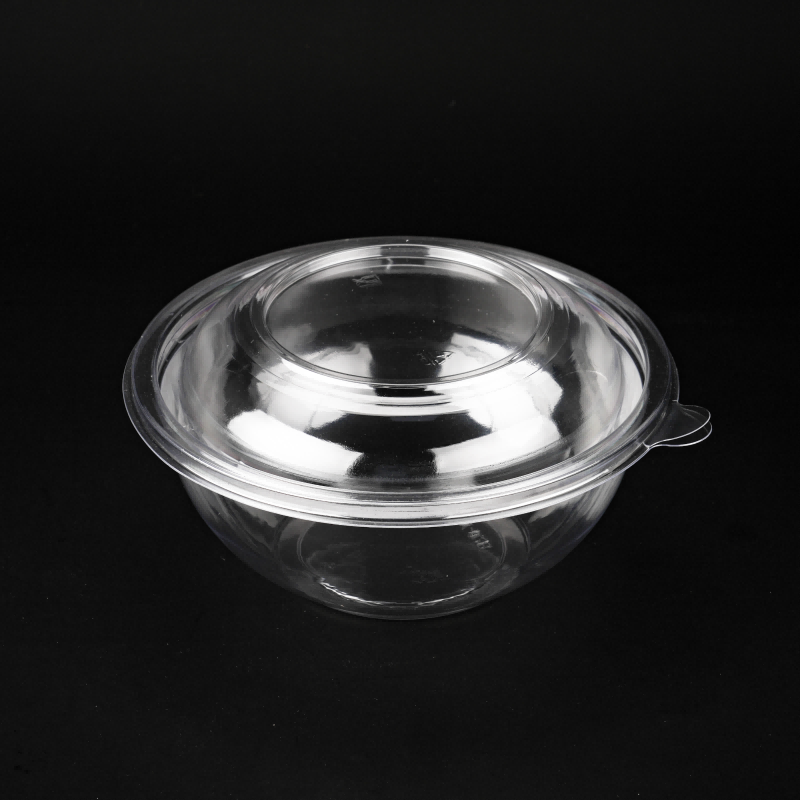
The ventilation mechanism in PET clear salad containers operates through strategically positioned openings, microperforation patterns, or specialized lid designs that regulate airflow without compromising structural integrity or food safety. Understanding how different ventilation configurations affect specific leafy green varieties—from delicate butter lettuce to robust kale—enables informed purchasing decisions aligned with operational needs. This article examines the physiological requirements of leafy greens, ventilation design principles, material performance characteristics, and practical evaluation criteria to guide selection of PET clear salad containers that maintain product quality from packaging through consumption.
Understanding the Respiration Requirements of Leafy Greens
Post-Harvest Physiology and Gas Exchange Needs
Leafy greens continue metabolic respiration after harvesting, consuming oxygen and producing carbon dioxide, water vapor, and ethylene gas. The respiration rate varies significantly across species and cultivars, with baby spinach and arugula exhibiting higher rates than romaine or iceberg lettuce. PET clear salad containers must facilitate controlled gas exchange that slows respiration without creating anaerobic conditions that accelerate decay. When oxygen levels drop below critical thresholds inside sealed containers, fermentative metabolism begins, producing off-odors and accelerating tissue breakdown. Conversely, excessive ventilation allows rapid moisture loss, causing visible wilting within hours of packaging.
The ideal ventilation system for PET clear salad containers creates a modified atmosphere that extends the lag phase before quality deterioration becomes noticeable. Research demonstrates that maintaining oxygen concentrations between 1-5% and carbon dioxide levels between 5-10% significantly extends the shelf life of most leafy greens. However, achieving this balance through passive ventilation alone requires precise engineering of opening size, placement, and total ventilation area relative to container volume and typical product load. Understanding these physiological parameters helps explain why generic ventilation patterns often fail with specific leafy green products.
Moisture Management and Condensation Control
Leafy greens lose moisture continuously through transpiration, and this water vapor accumulates inside closed containers as condensation when temperature fluctuations occur during storage and display. Excess condensation creates favorable conditions for bacterial and fungal growth, particularly on cut edges and damaged tissue. PET clear salad containers with inadequate ventilation trap this moisture, leading to slimy texture development and rapid spoilage. The visibility provided by clear PET materials makes condensation problems immediately apparent to consumers, directly impacting purchase decisions at the point of sale.
Effective ventilation in PET clear salad containers must balance moisture retention to prevent wilting with moisture removal to avoid condensation. This requires understanding the relationship between ventilation area, airflow patterns, and humidity gradients within the container. Containers designed for refrigerated display environments need different ventilation characteristics than those intended for ambient temperature meal prep applications. The placement of ventilation openings relative to product mass influences air circulation patterns, with bottom or side vents often providing better condensation management than top-only ventilation by promoting convective air movement.
Ethylene Sensitivity and Gas Accumulation
Many leafy greens exhibit ethylene sensitivity, responding to this plant hormone with accelerated senescence symptoms including yellowing, leaf abscission, and increased respiration rates. Certain varieties like lettuce produce ethylene endogenously, while others primarily respond to exogenous ethylene from neighboring produce. When multiple PET clear salad containers are stored together in retail displays or distribution environments, ethylene accumulation becomes a cross-contamination concern. Adequate ventilation allows ethylene dissipation, reducing its concentration below action thresholds that trigger quality loss.
The choice of ventilation design in PET clear salad containers should account for typical storage configurations and proximity to high ethylene-producing items. Containers with continuous ventilation pathways rather than isolated openings provide better ethylene management in mixed-product display cases. For operations packaging multiple leafy green varieties together, selecting PET clear salad containers with enhanced ventilation becomes even more critical to accommodate the most sensitive items in the mix. This consideration often receives insufficient attention during container selection but significantly impacts real-world performance across distribution channels.
Evaluating Ventilation Design Features in PET Clear Salad Containers
Vent Hole Configuration and Placement Strategies
The most common ventilation approach in PET clear salad containers involves discrete circular or oval openings molded into lids or sidewalls during thermoforming. The diameter, number, and distribution pattern of these openings determine total ventilation area and airflow characteristics. Small-diameter holes (2-4mm) provide modest gas exchange suitable for low-respiration greens like iceberg lettuce, while larger openings (6-10mm) accommodate higher respiration rates of products like spinach and mixed spring greens. The total ventilation area typically ranges from 0.5% to 3% of container surface area, with higher percentages used for more perishable products.
Placement strategy significantly affects ventilation performance in PET clear salad containers beyond simple hole size considerations. Top-lid ventilation provides straightforward manufacturing but may allow excessive moisture loss if openings are too large or poorly positioned. Side-wall ventilation promotes lateral airflow that can improve gas distribution throughout the product mass, particularly beneficial for deep containers with substantial product volume. Bottom ventilation, though less common due to drainage concerns, can leverage density differences between gases to enhance natural convection. Many advanced PET clear salad containers employ multi-position ventilation combining lid and sidewall openings to optimize airflow patterns for specific applications.
Microperforation Technology and Breathable Films
Some PET clear salad containers utilize microperforation technology featuring numerous tiny holes (typically 50-200 microns) distributed across lid surfaces. This approach provides higher total ventilation opening count while maintaining structural integrity and preventing product extrusion through openings. Microperforation allows more uniform gas exchange across the container surface compared to larger discrete openings, potentially creating more stable internal atmospheres. The manufacturing process typically employs laser perforation or mechanical needle perforation during or after thermoforming, adding cost compared to molded openings but offering greater design flexibility.
Advanced PET clear salad containers may incorporate breathable film laminations or patches that allow controlled gas transmission while blocking moisture and particulate passage. These selective-permeability materials enable precise atmosphere modification without requiring geometric openings that compromise barrier properties. However, breathable films add material cost and complexity, making them economically viable primarily for premium products or extended distribution chains. When evaluating PET clear salad containers with microperforation or breathable films, consider whether the performance benefits justify cost premiums for your specific product mix and distribution requirements.
Integrated Valve Systems and Active Ventilation
Some specialized PET clear salad containers feature integrated one-way valve systems that allow gas escape while limiting atmospheric ingress. These valves help manage pressure differentials that develop during temperature changes in refrigerated storage and transportation. By preventing vacuum formation that can collapse thin-wall containers, valve systems maintain structural integrity while still providing ventilation benefits. The valve mechanism typically consists of flexible polymer flaps positioned over molded openings, opening under positive internal pressure but sealing under negative pressure or external force.
Although less common in standard PET clear salad containers due to cost considerations, valve-integrated designs offer advantages for specific applications involving significant temperature cycling or altitude changes during distribution. The added complexity requires evaluation against simpler ventilation approaches for most operations. However, for businesses shipping prepared salads across diverse climate zones or elevation changes, the container integrity benefits may justify the investment. Understanding your distribution environment's pressure and temperature variability helps determine whether advanced valve systems provide meaningful advantages over conventional ventilation designs.
Material Properties and Performance Characteristics of PET
Gas Permeability and Barrier Performance
PET material itself provides moderate gas barrier properties, with oxygen transmission rates significantly lower than polypropylene or polyethylene but higher than materials like EVOH or aluminum foil. This inherent permeability means PET clear salad containers provide some gas exchange through the material matrix itself, independent of designed ventilation openings. The contribution of material permeability to total gas exchange becomes proportionally more significant in containers with minimal ventilation openings or in applications requiring extended shelf life. Understanding this baseline permeability helps explain performance differences between container designs that appear similar in ventilation geometry.
The wall thickness of PET clear salad containers influences both structural properties and gas transmission characteristics. Thinner walls (200-300 microns) provide higher permeability per unit area but may lack rigidity for stacking and handling. Thicker walls (400-600 microns) offer better structural performance but reduce material permeability contribution to total gas exchange. When selecting PET clear salad containers, consider how wall thickness interacts with ventilation design to achieve desired atmosphere modification. Containers relying primarily on material permeability for gas exchange require larger surface areas and thinner walls, while those using geometric ventilation can employ thicker walls for improved structural performance.
Clarity and Visibility Considerations
The exceptional optical clarity of PET clear salad containers serves critical merchandising functions by showcasing product freshness and appealing presentation. However, ventilation features can impact clarity depending on design execution. Large ventilation openings may interrupt visual continuity, while microperforation can create slight haze effects when viewing products at certain angles. The visual impact of ventilation features requires balancing functional gas exchange needs against merchandising priorities, particularly for retail applications where product visibility drives purchase decisions.
Some PET clear salad containers employ strategic ventilation placement that minimizes visual interference with primary viewing angles. Positioning openings on container shoulders or base regions rather than central lid areas maintains clear product visibility while still providing adequate gas exchange. For operations prioritizing premium presentation, selecting PET clear salad containers with discreet ventilation designs helps maintain the appealing aesthetic that clear materials provide. However, this consideration should not override functional ventilation requirements, as condensation and product deterioration from inadequate gas exchange create far more significant visual detractors than well-designed ventilation openings.
Temperature Performance and Thermal Stability
PET clear salad containers maintain dimensional stability across typical refrigerated storage temperatures, with minimal dimensional change between 0°C and 10°C. This thermal stability ensures that ventilation openings maintain intended dimensions and performance characteristics throughout the cold chain. However, temperature fluctuations during transportation and retail display cycles can create pressure differentials that stress thin container walls, particularly around ventilation openings where material has been removed. Selecting PET clear salad containers with appropriate wall thickness and reinforcement features around ventilation areas prevents deformation that could alter ventilation performance or compromise container integrity.
The thermal conductivity of PET influences temperature gradients within packaged products, affecting condensation patterns and respiration rates. Containers with larger ventilation openings allow ambient air interaction that can accelerate temperature equilibration but may also reduce cold chain efficiency if containers are exposed to warm environments. Understanding the typical temperature exposures in your distribution system helps optimize the balance between ventilation for gas exchange and thermal insulation for temperature maintenance. PET clear salad containers intended for meal delivery services experiencing extended ambient exposure require different ventilation-thermal performance balances than those used exclusively in controlled refrigerated retail environments.
Practical Selection Criteria for Operational Requirements
Product-Specific Matching and Compatibility Assessment
Different leafy green products require distinct ventilation characteristics based on respiration rates, moisture content, and ethylene sensitivity. Baby greens and tender varieties like butter lettuce need more conservative ventilation to prevent excessive moisture loss, while heartier options like kale and cabbage tolerate and sometimes benefit from enhanced air exchange. When selecting PET clear salad containers, create a ventilation requirement matrix matching your product portfolio to appropriate container specifications. This systematic approach prevents the common mistake of using a single container design across incompatible product types, which inevitably leads to either excessive spoilage or quality complaints.
Mixed salad products present particular challenges since component greens may have conflicting ventilation requirements. In these cases, selecting PET clear salad containers optimized for the most sensitive component typically provides the best overall performance, even if it represents a compromise for more robust ingredients. Testing container-product combinations under realistic storage conditions before committing to large volume purchases identifies performance issues that may not be apparent from specification review alone. Many suppliers of PET clear salad containers offer sample programs enabling validation testing with your specific products and distribution conditions before full-scale implementation.
Distribution Chain and Shelf Life Requirements
The intended distribution pathway significantly influences optimal ventilation selection in PET clear salad containers. Products destined for same-day local delivery require less sophisticated ventilation than those entering multi-day regional distribution networks. Extended distribution chains with multiple temperature exposures and handling events benefit from enhanced ventilation that maintains product quality despite less-than-ideal conditions. Conversely, ultra-short distribution chains might prioritize moisture retention over aggressive gas exchange, accepting slightly higher respiration rates in exchange for preventing wilting during brief display periods.
Shelf life targets should inform ventilation selection in PET clear salad containers based on realistic performance data rather than aspirational goals. A container design providing excellent 3-day performance may show unacceptable quality loss at 5 days, requiring enhanced ventilation features or complete redesign for extended distribution. Understanding the relationship between ventilation characteristics and achievable shelf life under your operational conditions prevents setting unrealistic expectations. Many businesses discover that achieving desired shelf life extensions requires not just container optimization but also improvements in cold chain management, handling procedures, and raw material quality that container selection alone cannot address.
Cost-Performance Balance and Economic Optimization
PET clear salad containers with advanced ventilation features typically command price premiums over basic designs, making cost-performance optimization essential for profitability. Enhanced ventilation technologies like microperforation, breathable films, or integrated valves add 15-40% to container costs compared to simple molded openings. This investment only makes economic sense when the performance improvements translate to measurable value through reduced spoilage, extended distribution reach, or premium pricing opportunities. Calculating the total cost of ownership including container price, spoilage losses, and handling efficiency provides a more complete picture than simple per-unit container costs.
For many operations, selecting mid-tier PET clear salad containers with well-designed conventional ventilation provides the optimal balance between performance and cost. The most expensive containers are not always the most appropriate choice, particularly when distribution systems already maintain excellent cold chain control and product turnover is rapid. Conversely, attempting to minimize container costs by selecting inadequate ventilation designs creates false economy when increased spoilage and quality complaints exceed container savings. Conducting structured cost-benefit analysis comparing container options against actual performance metrics in your operation identifies the true economic optimum rather than relying on lowest initial cost or assumed premium performance.
Regulatory Compliance and Food Safety Standards
All PET clear salad containers must meet food contact regulations in relevant jurisdictions, with ventilation features not creating pathways for contamination or compromising food safety. Ventilation openings must be designed to prevent insect access while still providing adequate gas exchange, typically achieved through opening sizes below 2mm or the use of integrated filters. Containers used in HACCP-certified operations require documentation demonstrating that ventilation design does not create critical control point failures or increase contamination risk. Understanding applicable regulatory requirements in your markets prevents selecting containers that perform well functionally but fail compliance requirements.
Some jurisdictions impose specific requirements on ventilation claims or performance representations for food packaging. Marketing PET clear salad containers as providing 'modified atmosphere' or 'extended shelf life' may trigger regulatory obligations for performance validation and labeling disclosure. Working with container suppliers who understand food packaging regulations and can provide necessary compliance documentation simplifies regulatory management. When expanding into new markets, verify that your selected PET clear salad containers meet local requirements rather than assuming universal acceptance based on home market compliance.
Testing and Validation Methods for Container Performance
Shelf Life Evaluation Protocols
Rigorous shelf life testing provides the most reliable assessment of PET clear salad containers' ventilation performance with your specific products. Structured testing protocols should include multiple production lots of leafy greens packaged in candidate containers and stored under controlled temperature conditions matching your distribution environment. Daily evaluation of visual quality, moisture loss, condensation formation, and microbial indicators throughout the intended shelf life period identifies performance trends and failure modes. Comparative testing against current container designs or competitive products provides context for interpreting results and making selection decisions.
Accelerated shelf life testing using elevated temperatures or intentionally stressed conditions can provide preliminary performance insights more quickly than real-time testing, though results require careful interpretation. Temperature abuse testing, where packaged products experience realistic warm exposures during simulated transportation delays, reveals how PET clear salad containers perform under non-ideal conditions that inevitably occur in real distribution systems. Including worst-case scenarios in validation testing prevents surprises after full-scale implementation when operational realities diverge from ideal laboratory conditions. Documentation of testing methodology and results creates valuable institutional knowledge for future container selection decisions and continuous improvement efforts.
Gas Composition Monitoring and Atmosphere Analysis
Direct measurement of internal atmosphere composition in sealed PET clear salad containers quantifies ventilation performance beyond visual quality assessment. Using gas analyzers to track oxygen and carbon dioxide concentrations over time reveals whether ventilation design achieves intended modified atmosphere targets. Significant deviations from optimal ranges indicate either excessive or insufficient ventilation requiring design adjustment. Gas composition monitoring also identifies container-to-container variability that might indicate manufacturing inconsistencies affecting ventilation performance.
Atmosphere analysis should be conducted under conditions matching actual use, including realistic product loads and temperature profiles. Empty container testing or artificial ventilation measurements using laboratory fixtures may not accurately predict performance with actual leafy green products that consume oxygen and produce carbon dioxide. The respiration contribution significantly affects internal atmosphere composition, particularly in containers with minimal ventilation where product activity dominates over atmospheric exchange. Measuring gas composition at multiple time points throughout shelf life reveals atmosphere evolution patterns and identifies when critical thresholds are exceeded that trigger quality deterioration.
Consumer Acceptance and Sensory Evaluation
Technical performance metrics must ultimately translate to consumer-acceptable product quality at the point of consumption. Structured sensory evaluation involving trained panels or target consumer groups assesses whether PET clear salad containers maintain appealing appearance, texture, and flavor characteristics throughout shelf life. Visual appeal evaluation considers not just product condition but also condensation visibility, container clarity, and overall package presentation. Texture assessment identifies whether ventilation design prevents wilting while avoiding desiccation that creates tough, unpalatable greens.
Consumer testing should include products at various stages of shelf life, including end-of-life products representing worst-case acceptable conditions. This approach identifies whether selected PET clear salad containers maintain minimum quality standards throughout the entire intended distribution period. Including competitive product comparisons in consumer testing provides market context and helps establish whether container-driven quality differences are perceptible to end users. Consumer feedback often reveals concerns not captured by technical metrics, such as difficulty opening containers or perceptions about freshness based on packaging appearance rather than actual product condition.
FAQ
What ventilation area percentage is optimal for most leafy green salads in PET clear salad containers?
Most leafy green applications perform well with total ventilation area representing 1-2% of container surface area. This range provides sufficient gas exchange to manage respiration and prevent anaerobic conditions while limiting moisture loss that causes wilting. Higher-respiration products like baby spinach may benefit from ventilation areas approaching 2.5-3%, while lower-respiration items like iceberg lettuce perform adequately with 0.75-1.5% ventilation area. The optimal percentage also depends on container volume, product load density, and expected storage duration, requiring adjustment based on specific operational parameters rather than applying universal standards.
Can PET clear salad containers with minimal ventilation extend shelf life compared to highly ventilated designs?
Minimal ventilation can extend shelf life for specific leafy greens by reducing moisture loss and maintaining higher humidity that prevents wilting, but only if respiration rates remain manageable within the restricted gas exchange environment. For low-respiration products stored under excellent cold chain conditions, reduced ventilation may provide benefits. However, most mixed green products and higher-respiration varieties perform better with moderate ventilation that balances moisture retention against the need to remove respiration-generated carbon dioxide and ethylene. Attempting to extend shelf life through ventilation restriction alone often backfires when oxygen depletion triggers anaerobic fermentation, creating quality defects that outweigh any moisture retention benefits.
How does refrigeration temperature affect ventilation requirements in PET clear salad containers?
Refrigeration temperature significantly impacts respiration rates, with each 10°C temperature reduction roughly halving metabolic activity in leafy greens. Consequently, PET clear salad containers used in consistently cold storage (0-2°C) may perform adequately with less ventilation than those experiencing typical retail display temperatures (4-7°C) or periodic warm exposures. Temperature fluctuations during distribution create condensation challenges that require enhanced ventilation to manage moisture accumulation. Operations with excellent cold chain control can optimize container selection toward moisture retention, while those with variable temperature management should prioritize ventilation sufficient to handle worst-case warm exposure scenarios that accelerate respiration and condensation formation.
Should ventilation design differ for pre-washed versus unwashed leafy greens in PET clear salad containers?
Pre-washed leafy greens typically require more aggressive ventilation than unwashed products due to surface moisture from washing processes and tissue damage from processing that increases respiration rates. The residual water on washed greens creates higher humidity environments inside containers, necessitating ventilation designs that prevent condensation accumulation while still maintaining adequate moisture to prevent wilting. Unwashed greens with intact protective cuticles and lower surface moisture can tolerate reduced ventilation that minimizes moisture loss during storage. Many operations use different PET clear salad containers for washed and unwashed products, optimizing ventilation characteristics for each product type's specific requirements rather than attempting to use universal designs across dissimilar products.
Table of Contents
- Understanding the Respiration Requirements of Leafy Greens
- Evaluating Ventilation Design Features in PET Clear Salad Containers
- Material Properties and Performance Characteristics of PET
- Practical Selection Criteria for Operational Requirements
- Testing and Validation Methods for Container Performance
-
FAQ
- What ventilation area percentage is optimal for most leafy green salads in PET clear salad containers?
- Can PET clear salad containers with minimal ventilation extend shelf life compared to highly ventilated designs?
- How does refrigeration temperature affect ventilation requirements in PET clear salad containers?
- Should ventilation design differ for pre-washed versus unwashed leafy greens in PET clear salad containers?